
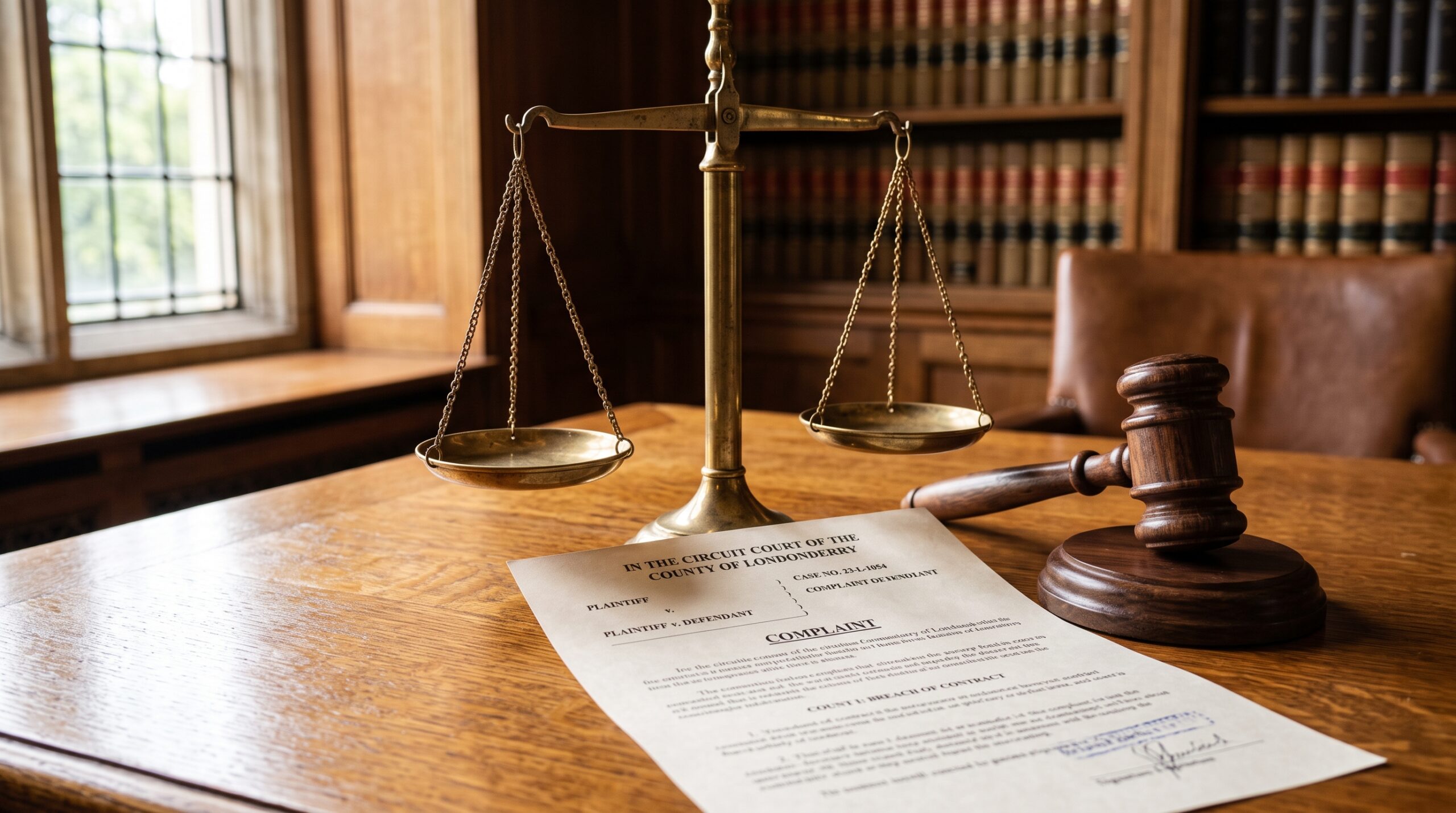
You receive a thick, official envelope via certified mail or a personal server handed directly to your doorway. Your pulse spikes as your eyes scan the formal legal language, realizing you have just been named as a defendant in a civil lawsuit, or alternatively, you are finally pulling the trigger on filing a long-overdue legal claim against someone who wronged you.
That sudden wave of intimidation is completely natural when facing an unfamiliar judicial system.
Countless everyday individuals view the courtroom as an opaque, terrifying maze reserved exclusively for high-priced corporate attorneys. In reality, every civil lawsuit follows a structured, predictable roadmap from initial dispute to final resolution. Demystifying that procedural journey transforms you from a nervous spectator into an informed, empowered participant.
The Pleading Stage: Filing the Complaint and Answer
Launching the Legal Battle
Every civil lawsuit officially begins with the filing of the initial pleadings. The plaintiff—the party initiating the action—files a formal document known as a “complaint” with the court clerk, detailing the factual basis of the grievance and the specific legal damages sought.
Once filed, the court issues a summons, requiring formal service of process to ensure the defendant receives legal notice of the claims brought against them.
Responding to the Allegations
The defendant cannot simply ignore the paperwork without facing severe default consequences.
-
The Answer Deadline: Defendants typically have a strict window—often 20 to 30 days depending on the jurisdiction—to file a formal “answer” responding to each allegation point-by-point.
-
Affirmative Defenses: The answer allows the defendant to raise affirmative defenses, such as arguing the statute of limitations has expired or claiming contributory negligence.
-
Motions to Dismiss: Before answering, a defense attorney may file a motion to dismiss if the complaint fails to state a legally valid claim on its face.
Expert Insight: Think of the pleading stage as setting the boundaries of the battlefield. The complaint and answer establish what facts are agreed upon and what core issues require judicial resolution.
The Discovery Phase: Uncovering Facts and Evidence
Peeking Behind the Judicial Curtain
Once the initial pleadings are locked in, the litigation enters its longest and most rigorous phase: discovery. Discovery is the formal legal process where both sides exchange information, interrogate witnesses, and examine documents to prevent trial by ambush.
Federal and state rules grant broad powers to compel the opposing party to disclose relevant evidence, ensuring transparency before any courtroom showdown.
Core Tools Used During Discovery
Navigating discovery successfully requires mastering several distinct fact-finding mechanisms.
-
Interrogatories: Written questions that the opposing party must answer under oath, providing critical baseline facts about the dispute.
-
Requests for Production: Formal demands to hand over physical documents, emails, contracts, financial records, or photographs relevant to the case.
-
Depositions: Live, face-to-face questioning of witnesses, experts, or opposing parties conducted under oath in a conference room with a court reporter transcribing every word.
Pre-Trial Motions and Settlement Negotiations
Thinning the Herd Before the Jury Arrives
Not every lawsuit makes it to a dramatic trial in front of a jury. As discovery wraps up, attorneys analyze the uncovered evidence to see if the case can be resolved without a costly trial.
This window triggers intense pre-trial motions and active settlement negotiations designed to save clients substantial legal fees.
Resolving Claims Outside the Courtroom
Exploring alternative dispute resolution and summary judgments keeps control in the hands of the litigants.
-
Summary Judgment Motions: If discovery proves there are no genuine disputes over core facts, a party can ask the judge to rule in their favor immediately based on the law alone.
-
Mediation and Arbitration: Courts frequently order parties to sit down with a neutral mediator to hash out a mutually agreeable settlement compromise.
-
Settlement Power: The vast majority of civil cases settle right here, avoiding the financial uncertainty and emotional stress of a courtroom verdict.
The Trial Stage: Presenting Your Case to the Court
Stepping Into the Courtroom Spotlight
If mediation fails and summary motions are denied, the lawsuit finally proceeds to trial. A civil trial can be a bench trial—where a judge decides both facts and law—or a jury trial, where six to twelve ordinary citizens listen to evidence and render a verdict.
The trial follows a rigid, highly choreographed procedural sequence designed to ensure fairness for both sides.
The Flow of a Civil Trial
Understanding the courtroom rhythm keeps participants grounded during high-stakes testimony.
-
Opening Statements: Each attorney outlines the narrative they intend to prove through evidence, giving the judge or jury a roadmap of the case.
-
Plaintiff’s Case-in-Chief: The plaintiff calls witnesses and introduces exhibits, followed by cross-examination from the defense team.
-
Defense’s Turn and Closing Arguments: The defendant presents their rebuttal evidence, concluding with final closing arguments where lawyers summarize why the law favors their client.
Verdict, Judgment, and the Appeals Process

Reaching the Finish Line
After closing arguments, the jury deliberates privately behind closed doors until they reach a verdict, or the judge issues a final ruling in a bench trial. If the plaintiff wins, the judge enters a formal monetary or injunctive judgment against the defendant.
However, the legal battle may not end immediately when the gavel falls in the lower court.
Challenging the Court’s Final Ruling
Losing parties possess the right to test the legal integrity of the trial proceedings.
-
Post-Trial Motions: Attorneys can file motions for a new trial or a judgment notwithstanding the verdict if they believe severe legal errors occurred.
-
Filing an Appeal: A party can escalate the case to an appellate court, arguing that the trial judge made mistakes in applying the law or admitting evidence.
-
Enforcing the Judgment: If no appeal is filed or the appellate court upholds the verdict, the winning party begins the formal process of collecting their awarded damages through asset garnishments or liens.
FAQ
1. How long does a typical civil lawsuit take from start to finish?
A standard civil lawsuit can take anywhere from several months to a couple of years. The timeline depends heavily on court scheduling backlogs, the complexity of the dispute, the depth of the discovery phase, and whether the parties settle before trial.
2. What is the difference between the plaintiff and the defendant?
The plaintiff is the individual or entity that files the initial complaint and initiates the lawsuit seeking legal relief or damages. The defendant is the party being sued who must respond to the allegations and defend against the claims.
3. Do most civil lawsuits go all the way to a jury trial?
No. The vast majority of civil lawsuits—often estimated between 90% and 95%—settle out of court through mediation, direct negotiations, or are dismissed via pre-trial motions long before ever reaching a jury trial.
4. What happens during the discovery phase of a lawsuit?
During discovery, both parties exchange relevant documents, answer written questions under oath (interrogatories), and take depositions (live testimony recorded by a court reporter) to uncover all facts and evidence before trial.
5. Can a losing party appeal the outcome of a civil lawsuit?
Yes. If a party believes the trial judge made significant legal errors during the proceedings, they can file an appeal with a higher appellate court to review the lower court’s handling of the law and trial procedures.
Conclusion
Navigating a civil lawsuit can feel overwhelming, but breaking the litigation process down into distinct stages reveals a logical, manageable framework. By understanding pleadings, mastering discovery, evaluating settlement options, and preparing for trial or appeal, you eliminate the fear of the unknown. Protect your legal rights, consult experienced counsel early, and approach the courtroom with confidence.
Leave a Reply