
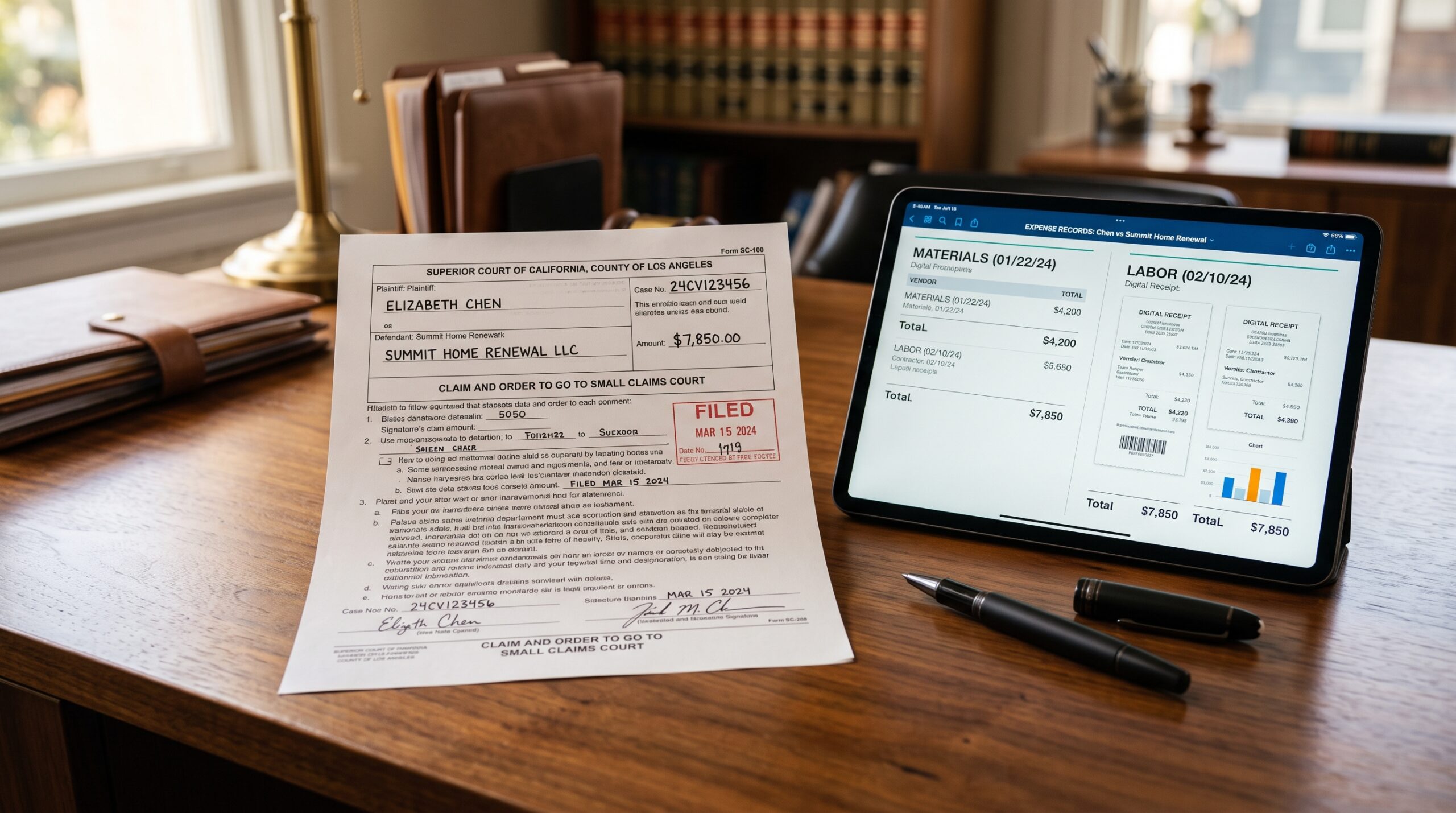
You stare at an unreturned security deposit, an unpaid invoice from a completed freelance project, or a shoddy repair job that cost you thousands, wondering if it is even worth fighting back. Hiring an expensive attorney for a dispute worth a few thousand dollars often costs more than the actual amount you are trying to recover, leaving you feeling trapped and frustrated by the system.
That persistent financial barrier causes countless people to walk away from money they are rightfully owed every single day.
Fortunately, you do not need a law degree or deep pockets to demand justice. Small claims court is specifically designed as an accessible, expedited venue where everyday individuals can represent themselves without lawyers. Mastering how to file, prepare, and present your own case changes everything. Unpacking the step-by-step framework of small claims litigation gives you the exact blueprint needed to command the courtroom and win.
Determining Eligibility and Understanding Small Claims Limits
Checking Your Claim Against Jurisdictional Caps
Before filling out any paperwork, you must verify whether your dispute actually qualifies for small claims court. Every jurisdiction sets strict monetary caps—frequently ranging anywhere from $5,000 to $25,000 depending on your state or region. If your damages exceed that ceiling, you have two choices: reduce your claim to fit the maximum limit and waive the remainder, or file a traditional civil suit.
Furthermore, small claims courts generally handle financial disputes, property damage, and contract breaches rather than complex injunctions or custody battles.
Common Disputes Handled in Small Claims
Identifying your case type ensures you target the correct judicial division from the start.
-
Security Deposit Disputes: Landlords who wrongfully withhold rental deposits without providing itemized repair deductions within legal deadlines.
-
Breach of Contract: Contractors, vendors, or service providers who took your money but failed to deliver the agreed-upon work or goods.
-
Property Damage and Minor Auto Accidents: Disagreements over repair bills after fender benders or property neglect where insurance falls short.
Expert Insight: Never try to “split” a single large claim into multiple smaller filings to get around court limits; judges view claim-splitting as an abuse of process and will instantly dismiss your filings.
Preparing Your Case: Evidence and Documentation
Treating Paperwork as Your Silent Witness
In small claims court, emotions carry zero weight; verifiable proof wins judgments. Long before you step foot inside a courthouse, you must gather every scrap of documentation connected to your dispute.
Assemble a comprehensive chronological paper trail that tells an unmistakable story of financial loss and broken promises.
Essential Evidence Categories to Compile
Organizing your proof cleanly gives the judge an immediate, undeniable grasp of the facts.
-
Contracts and Agreements: Signed leases, written estimates, purchase orders, or professional service agreements outlining the original terms.
-
Financial Proof: Bank statements, cancelled checks, credit card receipts, and money transfer confirmations showing exact sums paid out.
-
Corroborating Communications: Printed copies of text messages, emails, and certified demand letters sent to the defendant attempting to resolve the issue beforehand.
Filing the Claim and Serving the Defendant
Completing the Court Intake Paperwork
Once your evidence is locked down, you initiate the lawsuit by filling out a simple plaintiff’s claim form at your local courthouse or via their online e-filing portal. You must provide the correct legal name and physical address of the defendant—if you sue a business under a casual trade name rather than its registered corporate entity, collecting a future judgment becomes nearly impossible.
Pay the required court filing fee, which usually scales based on the size of your monetary claim.
Executing Proper Service of Process
You cannot simply text the court papers to the person you are suing; the defendant must be formally notified through legal service of process.
-
Certified Mail or Sheriff Delivery: Depending on local rules, the court clerk may mail the notice via certified mail, or you may need to hire a process server or local sheriff.
-
Proof of Service: An affidavit proving the defendant received notice must be filed with the court before any hearing can proceed.
-
The Waiting Period: The defendant is given a set window—typically 20 to 30 days—to file an answer or prepare for the upcoming court date.
Expert Insight: Double-check the defendant’s address before filing. If a process server cannot locate them and 90 days pass without service, the court will dismiss your case, forcing you to start over.
Presenting Your Case Effectively on Hearing Day
Stepping Into the Courtroom With Confidence
On the day of your hearing, arrive at least 30 minutes early, dress in neat business-casual attire, and observe how other cases are handled before yours is called. When the judge or magistrate calls your name, step forward with your evidence binders clearly organized.
Small claims hearings move fast; judges often hear dozens of cases in a single morning session, meaning you must be concise, polite, and laser-focused.
Delivering a Structured Oral Argument
When the judge asks you to present your side, follow a straightforward, time-tested narrative framework.
-
State the Relationship: Briefly explain how you and the defendant crossed paths (e.g., “On January 10th, I hired the defendant to repair my roof…”).
-
Highlight the Breach: Detail exactly how the defendant failed their obligation or broke the agreement.
-
Quantify the Damages: Point directly to your receipts and invoices, proving the exact dollar amount required to make you whole.
Winning the Judgment and Collecting Your Money

Receiving the Judge’s Verdict
At the conclusion of the hearing, the judge will either issue an immediate verbal ruling or mail a written decision a few days later. If you win, the court enters a formal judgment ordering the defendant to pay you a specific sum.
However, winning the piece of paper does not automatically mean cash lands in your bank account; many losing defendants fail to pay voluntarily.
Post-Judgment Collection Strategies
If the defendant ignores the judgment, you must utilize legal enforcement mechanisms to recover your funds.
-
Wage Garnishment: Ask the court for an order to siphon a percentage of the defendant’s regular paycheck directly through their employer.
-
Bank Levies: Seize funds directly from the defendant’s known personal or business checking accounts.
-
Property Liens: Place a legal lien against real estate or vehicles owned by the defendant, ensuring you get paid when they sell or refinance.
FAQ
1. What is the maximum amount I can sue for in small claims court?
Small claims monetary limits vary widely by jurisdiction, typically ranging from $2,500 up to $25,000 depending on your state, county, or country. Check your local court’s specific rules before filing.
2. Do I need a lawyer to represent me in small claims court?
No. Small claims court is purposely structured so that everyday citizens can file and present cases themselves without hiring an attorney. In fact, some jurisdictions restrict or prohibit lawyers from participating in small claims hearings altogether.
3. What kind of evidence do I need to bring to the hearing?
You should bring all physical documentation supporting your claim, including written contracts, receipts, bank statements, text messages, emails, photographs of damage, and written estimates from professional third parties.
4. What happens if the defendant fails to show up for the court hearing?
If the defendant is properly served with notice but fails to appear in court on hearing day, you can ask the judge for an automatic “default judgment,” granting you a win based on your presented claims.
5. Does winning a small claims judgment guarantee I will get paid?
Not automatically. While a judgment legally entitles you to the money, if the defendant refuses to pay, you must take additional enforcement steps such as wage garnishment, bank levies, or placing property liens.
Conclusion
Small claims court removes the intimidating barrier of high legal fees, giving everyday individuals a direct path to resolve financial disputes. By checking your jurisdictional limits, organizing rigorous evidence, serving the defendant properly, and presenting a calm, structured argument, you take full control of your financial recovery. Audit your pending disputes today, file your claim with confidence, and make sure you recover what you are owed.
Leave a Reply