
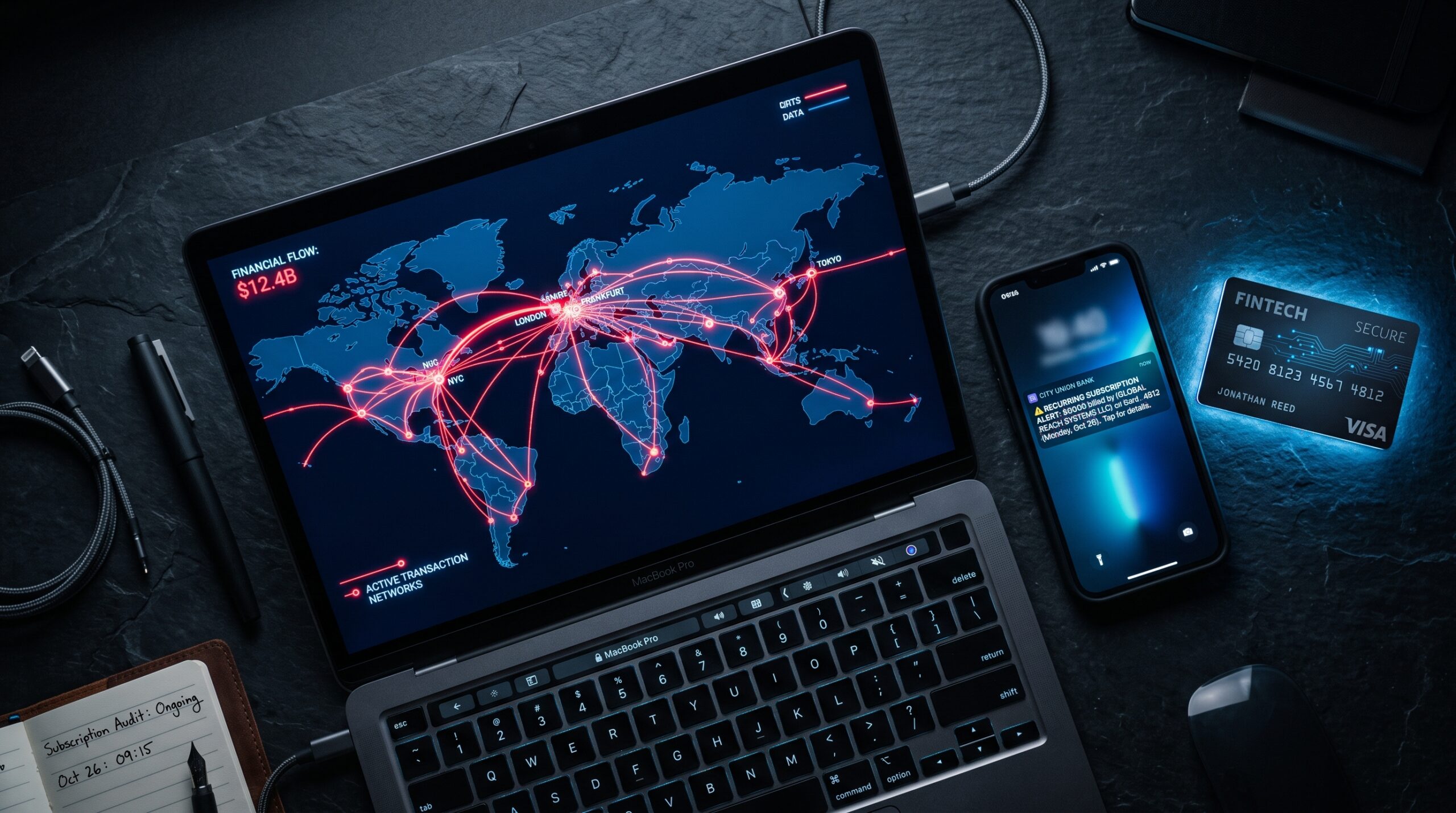
The digital marketplace is borderless until you try to cancel a rogue subscription. Picture this: you sign up for a $1 trial for a specialized software tool or e-commerce service hosted on a server overseas. Weeks later, your bank statement reflects a hefty, recurring monthly charge of $99. You hunt for a cancellation button, but find a digital labyrinth. When you finally dispute the charge with your credit card issuer, the overseas merchant fights back using foreign corporate entities, obscure terms of service, and conflicting international laws.
Welcome to the murky underworld of cross-border subscription traps. As digital commerce expands, navigating international jurisdiction and consumer rights has become a high-stakes chess match. Let us dissect how international law handles these transnational commercial disputes, what rights protect you, and how legal systems address rogue multi-national operators.
The Anatomy of a Transnational Subscription Trap
Subscription traps—often disguised as free trials, automated continuity programs, or low-cost introductory offers—rely heavily on geographic fragmentation to escape regulatory accountability. When a consumer in one country signs up with an online vendor incorporated in a tax haven or a foreign state, a classic conflict of laws emerges.
Operators of deceptive subscription models intentionally scatter their infrastructure. The website front end might be hosted in Iceland, the payment processor registered in Singapore, the operational headquarters hidden behind a Delaware shell corporation, and the actual beneficial owners residing elsewhere. This jurisdictional dispersion creates immediate friction. If an affected user attempts legal recourse, they face a wall of procedural complexities designed to exhaust their patience and financial resources.
Understanding how these traps exploit gaps in domestic legislation is your first line of defense. Most predatory platforms utilize dark patterns—such as pre-checked renewal boxes, intentionally obscured recurring billing disclosures, and intentionally sluggish customer support queues—to lock consumers into endless billing cycles before the initial trial period expires.
International Jurisdiction: Whose Court Has the Power?
When a cross-border dispute escalates beyond a simple bank chargeback, the threshold question for any legal system is jurisdiction. Jurisdiction dictates whether a court possesses the legal authority to hear a case, summon a foreign defendant, and issue an enforceable judgment.
Historically, courts operated on rigid territorial principles. However, modern e-commerce has forced legal frameworks to adapt. Under private international law principles—such as those found within European Union regulations or common law “long-arm” statutes—jurisdiction often follows the consumer’s domicile if the foreign merchant actively targets that specific geographic market.
-
Active vs. Passive Targeting: If an overseas website translates its interface into your native language, prices goods in your local currency, and actively markets to local consumers, courts are far more likely to assert jurisdiction over that foreign entity.
-
Choice of Forum Clauses: Predatory terms of service often mandate that any dispute must be litigated in a remote, foreign court—such as an obscure international district thousands of miles away. Courts increasingly scrutinize these clauses as unconscionable adhesion contracts, particularly when consumer protection laws are deliberately bypassed.
Conflict of Laws: Determining Which Rules Govern the Contract
Even if a local court accepts jurisdiction, it must next determine choice of law. Which nation’s legal statutes govern the interpretation of the digital contract? Merchants love to insert governing law clauses designating a jurisdiction with lax consumer protection laws.
However, mandatory consumer protection rules often override contractual fine print. Many legal systems enforce overriding mandatory provisions (lois de police) designed to protect local citizens from predatory foreign contracts. For instance, if local consumer protection statutes explicitly prohibit automatic renewals without explicit, isolated affirmative consent, a foreign vendor’s contrary terms of service may be declared legally void within that consumer’s home territory, regardless of what the fine print claims.
Cross-Border Enforcement Realities: Winning vs. Collecting

A legal judgment is only as powerful as its enforcement mechanism. Securing a default judgment against an evasive foreign subscription merchant in your local small claims court or civil tribunal can feel like a major victory, but collecting funds from an overseas entity with no physical domestic footprint presents a monumental hurdle.
International treaties, such as the Hague Choice of Court Conventions or reciprocal bilateral enforcement agreements, provide pathways for recognizing and enforcing foreign judgments. Yet, utilizing these mechanisms for a disputed $100 subscription fee is economically unviable. This harsh financial reality is precisely what rogue operators count on: the cost of cross-border litigation vastly exceeds the value of the individual consumer claim, creating an effective shield of impunity.
Consequently, alternative enforcement channels—such as institutional chargeback mechanisms governed by international credit card networks (Visa, Mastercard)—frequently serve as the most pragmatic battlefield for recovering funds lost to international subscription traps.
Practical Strategies to Neutralize Offshore Billing Fraud
Protecting yourself requires proactive digital hygiene and a firm understanding of transnational leverage points. Because traditional litigation is rarely practical for retail subscription disputes, you must lean on systemic operational controls:
-
Deploy Virtual Credit Cards: Utilize single-use or merchant-locked virtual credit card numbers offered by modern financial apps. This completely strips recurring billing scripts of their power, as subsequent unauthorized charges are automatically declined at the gateway level.
-
Document Everything Chronologically: Take time-stamped screenshots of checkout pages, confirmation screens, and cancellation attempts. If you must initiate a chargeback with your bank, this evidentiary trail proves that clear cancellation instructions were absent or ignored.
-
Leverage Regulatory Watchdogs: File cross-border fraud complaints through international networks like eConsumer.gov or domestic trade commissions, which aggregate data to target systemic international bad actors.
Conclusion and Actionable Next Steps
Cross-border subscription traps weaponize the complexities of international law, turning geographical distance into a shield for predatory digital merchants. While sorting through conflicting jurisdictions and foreign terms of service can feel overwhelming, understanding how jurisdiction and consumer rights intersect empowers you to protect your assets. Do not let foreign shell corporations exploit procedural confusion; audit your recurring billing statements today, lock your payment gateways with virtual cards, and immediately contest unauthorized transnational charges through your financial institution.
FAQ
1. Can a foreign subscription company sue me in their home country if I refuse to pay?
While technically possible under extreme contract terms, it is economically unviable for merchants to pursue small consumer debts across international borders due to the exorbitant costs of transnational litigation and service of process.
2. Are “clickwrap” terms of service legally binding across international borders?
Not automatically. For a choice-of-court or governing law clause to hold weight internationally, the merchant must prove the consumer was given clear, conspicuous notice of those terms before completing the transaction, which many predatory subscription traps fail to do.
3. What is the fastest way to break a recurring international subscription trap?
Contact your bank or credit card issuer directly to block future payments and file a formal dispute for unauthorized billing, bypassing the merchant’s obstructive customer service entirely.
4. Does local consumer protection law apply to websites hosted overseas?
It depends on whether the foreign business actively targets consumers in your country. If they market locally, local mandatory consumer protection laws frequently override foreign contract disclaimers.
5. Why do international subscription traps use multiple shell companies?
Distributed corporate structuring obscures the true beneficial owners, complicates asset recovery, and makes it difficult for regulatory bodies or defrauded consumers to serve legal notice.
Leave a Reply